The World Cup Is in Town
Every World Cup creates millions of people who suddenly want to play. Almost none of them are still playing by spring. Here is the two-week window that decides it.

06/04/2026
Toronto, Canada
Share



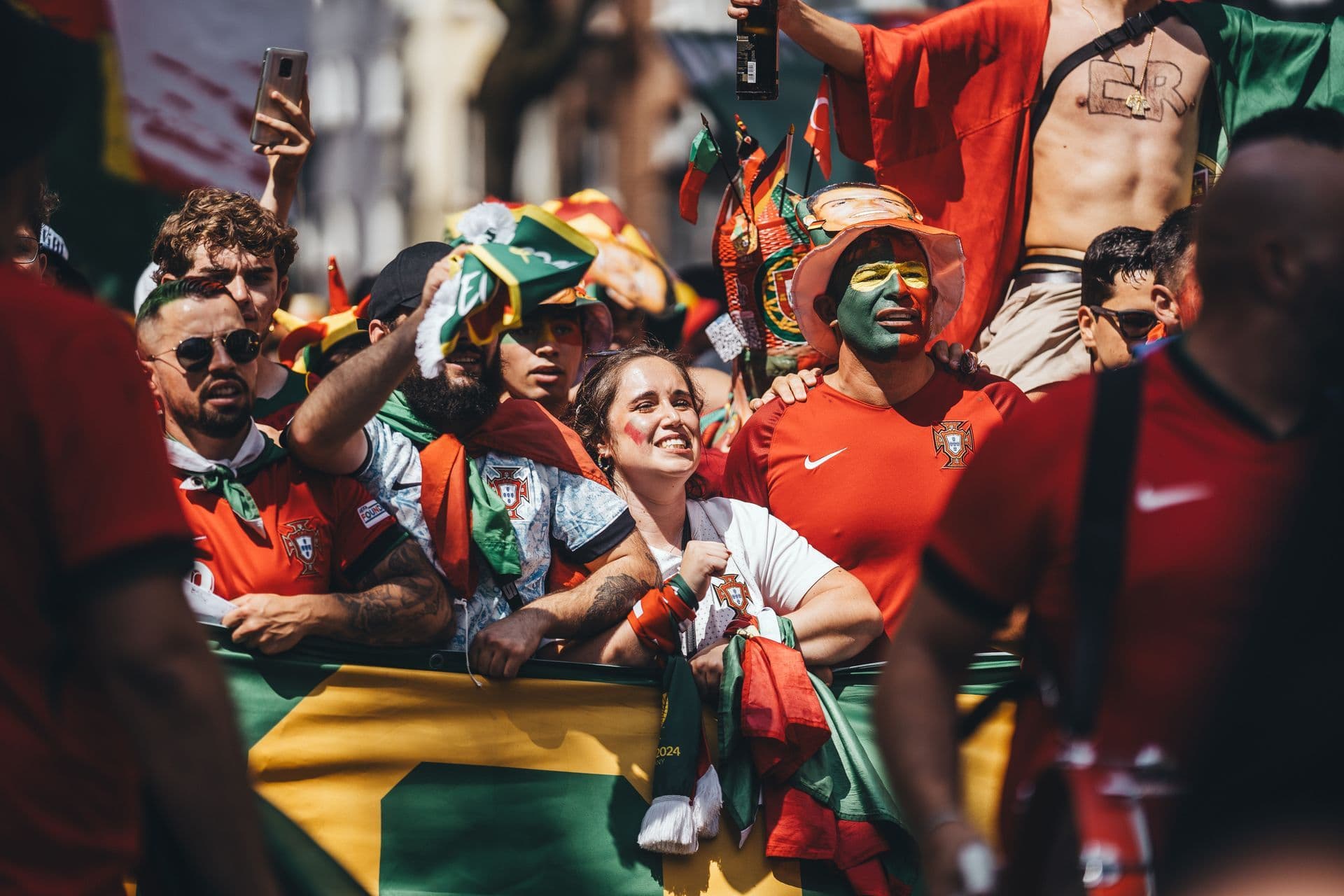
Right now, someone in your group chat is typing "we should actually play."
It happens every four years. The tournament kicks off, the group chat fills with fixture talk, someone organises a watch party, and somewhere between the group-stage upsets and the round of 16, the itch becomes words: we should get a game going.
Here is the uncomfortable truth about that message. Almost every "we should play" dies within a month. Not because people did not mean it. Because nobody converted the feeling into a fixture while the feeling was still alive.
This post is about the two-week window, and exactly what to do inside it.
The hype curve has a cliff
World Cup enthusiasm is not a slope, it is a cliff. While the tournament runs, casual players are watching three games a week, talking football at work, and feeling like players. The day after the final, the content stops, the group chat goes quiet, and the version of your mates who wanted to play goes back to being the version who is busy.
The groups that survive are not the ones with the most enthusiasm. They are the ones who booked something recurring before the final whistle. A one-off kickabout does not survive the cliff. A standing Tuesday does.
So the goal is not "organise a game." The goal is: by the time this tournament ends, your crew has a fixed day, a fixed pitch, and has already played at least twice. Two weeks is enough. Here is the play.
Week one: convert the watch party
1. Name the day before you leave the couch. The single highest-leverage sentence you can say at a watch party: "Same crew, Tuesday, 7pm, I'll sort a pitch." Do not ask "should we play sometime?" Open questions get enthusiasm; specific proposals get commitments.
2. Book a real pitch for a real time. A booked pitch transforms the plan from vibe to event. If you are in a World Cup host city like Toronto, expect peak demand and book further out. If you are watching from afar in Melbourne at strange hours, the 6am final crowd is exactly the crowd that will show up for football, they have already proven they will leave the house for it.
3. Cap it small and fill it fast. Your first game should be the easiest yes in the world: 5v5, an hour, a fair price split. Fourteen spots, first in first out. Scarcity does more for attendance than any reminder message.
4. Put one link in the chat. Not a poll, not "who's in?", one link where people commit. If the link takes the money for the pitch split at the same time, you have just filtered talkers from players in a single tap.
Week two: make it a fixture before it cools
5. Play game two before the final. One game is a memory. Two games is a pattern. Schedule the second game when everyone is still buzzing at the first, on the same day of the week, same time, same pitch. Repetition is the whole trick: people build their week around things that do not move.
6. Give three people a job. The number one killer of new games is a single organiser. While everyone is enthusiastic, hand out roles: one person owns the pitch booking, one owns the list, one owns the kit (bibs and a pump). Shared load is what makes a fixture survive its first busy week.
7. Start the table. Track something from game one: goals, wins, anything. The tournament you are all watching works on group tables and knockout drama. Borrow that energy. The moment your game has standings, banter has a home and people come back to defend a position.
What the window buys you
Do this inside two weeks and by November you are not "the group that played during the World Cup." You are a Tuesday game with twenty people in the chat, a waitlist, and an argument about who tops the scoring chart. Skip the window and you are a fond memory and a "we should do that again" every few months.
The difference was never passion. It was a booked pitch and a repeating day.
The admin does not have to be your job
Everything above can be run from a group chat and sheer will. Plenty of hosts do it. But the chasing, the money splitting, the list rebuilding: that is the part that burns organisers out by spring.
This is what we built Never FT for. Create the game once, drop the link in the chat, and the caps, waitlists, payments and fair teams run themselves. It is free for communities that are not charging players, and the group chat stays exactly where it is.
The World Cup gave you the crew. The next two weeks decide whether you keep them.
Related Articles
Go back to All Blogs
Why Your Tuesday Game Keeps Dying
Weekly games do not die from a lack of players. They die from organiser burnout. Here is the anatomy of a dying game, and the structure that keeps one alive.

Never FT Team
8 min read

Why Street Footballers Should Track Their Stats
Stats are not for pros. They are for staying. The moment your games produce a record, you stop being someone who plays sometimes and become a player with a season.
Never FT Team
3 min read

How Much Should You Charge?
The worked math for setting a match fee: pitch cost by format, the no-show buffer, and why a small fee makes your game more inclusive, not less.
Never FT Team
3 min read



FAQ
Frequently Asked Questions
Have questions about joining or hosting games?
From setting up your first match to tracking stats and invites, everything you need to know is right here.Have questions about joining or hosting games? From setting up your first match to tracking stats and invites, everything you need to know
Do I need to replace my current booking system?
How do players join my game?
Do I need to pay to host games?
I manage a venue. Can I host on Never FT?
What happens if someone drops out last minute?
Can I collect payments from players?



Still have questions?
Can’t find the answer you’re looking for?Please chat to our friendly team.Can’t find what you need? Chat with our team,they’re super friendly and happy to help.

Download Never FT and start playng today!


Scan Now!
Connect with us!
Never FT Ⓒ 2025 | All Rights Reserved.